

Ethnic violence escalates in North Central as 20 Fulani men killed, over 200 cattle maimed
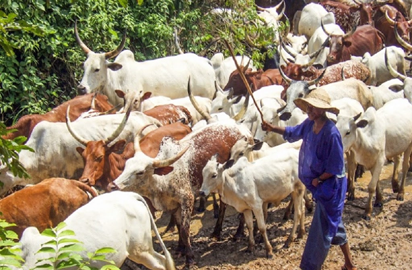
The cycle of violence in Nigeria’s North Central region is yet to abate, as retaliatory attacks against Fulani communities have allegedly intensify, compounding an already fragile ethno-communal situation.
While recent massacres in Tiv-dominated areas—where over 200 people were reportedly killed—have drawn widespread condemnation, fresh intelligence and local accounts suggest that non-violent Fulani communities are now being targeted in a wave of reprisal attacks that have received minimal attention and limited state response.
Between June 21 and 22, at least 20 Fulani men were reportedly killed, and more than 200 cattle either shot or mutilated in southern parts of Benue State, particularly around Makurdi.
The assailants, believed to be armed Tiv militias, allegedly launched coordinated attacks aimed at displacing Fulani settlements. Survivors, along with their scattered livestock, have since fled into nearby forests or crossed into neighboring Nasarawa and Plateau States.
According to sources who spoke with Zagazola Makama, the attacks are part of a broader strategy to forcibly evict Fulani communities and consolidate ethnic control over rural territories.
These sources also allege complicity by some local politicians, traditional rulers, and community elders, accusing them of providing arms to militias and enlisting the support of both retired and serving security personnel.
“These attacks are not random. There is coordination and a clear agenda to arm one side while painting the conflict as a one-sided aggression,” a senior security official said anonymously. “Many now view every Fulani person—even their cattle—as a bandit.”
Meanwhile, on the same weekend, violence erupted in Plateau State’s Mangu Local Government Area, where 12 people—mostly women and children—were brutally killed in what appears to be a case of mistaken identity. The victims were passengers in an 18-seater bus traveling from Basawa in Zaria, Kaduna State, to a wedding in Quan’an Pan LGA. After losing their way and seeking directions, the group was ambushed and killed. The vehicle was later set ablaze with some victims burned inside.
The North Central zone—which includes Benue, Plateau, Nasarawa, Taraba, Gombe, and Bauchi—along with parts of the North West such as Sokoto, Zamfara, and Katsina, has emerged as a hotspot for deeply entrenched ethno-communal and ethno-religious conflict. The violence largely pits sedentary farming communities against nomadic herders, primarily Fulani.
In the North West, a similar pattern of hostilities has emerged between Fulani and Hausa communities. Local Hausa militias, known as Askarawa, have reportedly taken up arms to defend their territories from violent Fulani groups, further complicating an already volatile situation.
Both sides in the conflict claim to be acting in self-defense or retaliation. This mutual distrust has led to an escalation in arms buildup, with communities on both ends reportedly stockpiling small arms and light weapons in anticipation of future attacks.
The situation is being further exacerbated by transnational jihadist groups. Katiba Macina, a brigade of the al-Qaeda-affiliated Jama’a Nusrat al-Islam wal-Muslimin (JNIM), is reportedly leveraging the victimization of Fulani communities as a recruitment strategy. Many disillusioned Fulani youths, already scarred by communal violence, are said to be joining extremist cells spreading from Mali, Burkina Faso, and Niger into northern Nigeria.
Observers warn that the lack of a balanced state response—particularly the failure to condemn or address attacks against peaceful Fulani communities—risks deepening perceptions of government bias or complicity.
The continued silence from state authorities and security agencies on these attacks is fueling resentment and inflaming tensions, pushing the region closer to the brink of a full-scale sectarian conflict.
To prevent further escalation, there is a pressing need for the government to act decisively. This includes immediate deployment of security forces to vulnerable areas, a public condemnation of all forms of violence irrespective of ethnic or religious affiliations, and the prosecution of individuals—including politicians and traditional leaders—found to be sponsoring or arming local militias.
Without urgent and even-handed intervention, the North Central region may slide into a much broader and more destructive conflict, one that would be far harder—and costlier—for the Nigerian state to control.