
Hausas allege ethnic cleansing in Northern Nigeria, petition ICC
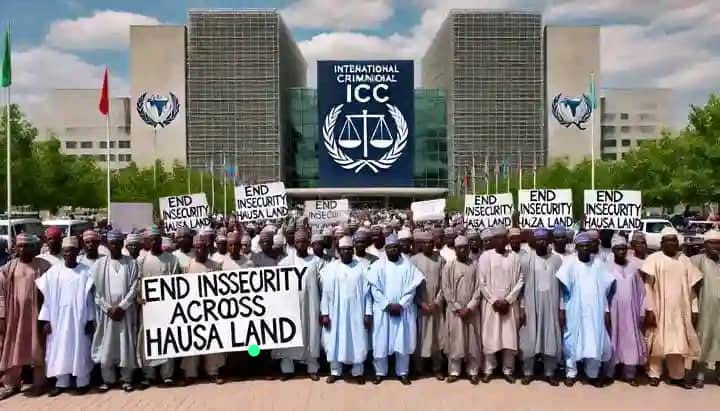
The Hausa Native Advancement and Development Initiative (HNADI) has accused armed Fulani bandits of waging a systematic campaign of violence against Hausa communities in Northern Nigeria, branding it ethnic cleansing with elements of potential genocide.
A petition to the International Criminal Court (ICC), submitted on behalf of the Hausa people, paints a chilling picture of mass killings, abductions, and destroyed villages, while alleging complicity by powerful elements within the Nigerian state and Fulani elites.
The document, laden with survivor testimonies and photographic evidence, demands urgent international intervention to halt a humanitarian catastrophe.
The petition details a relentless wave of attacks across Hausa heartlands in states like Kano, Katsina, Zamfara, and Kaduna. Entire villages have been razed, with homes, farmlands, and livestock reduced to ashes.
These are not random acts of banditry but a coordinated effort to eradicate Hausa populations from their ancestral lands
Families have been slaughtered, with mass graves reported in remote areas, such as the site of a 2024 massacre in Kankara, Katsina, where over 70 villagers were killed in a single night.
Women and children face abductions, often subjected to sexual violence or held for ransom, while tens of thousands have fled to overcrowded camps lacking food, water, or security.
The HNADI asserted in the petition that these are not random acts of banditry but a coordinated effort to eradicate Hausa populations from their ancestral lands, pointing to the scale and ethnic targeting of the violence as evidence of crimes against humanity.
Most damningly, the petition accuses the Nigerian state of complicity through deliberate inaction and favouritism.
It claimed security forces are frequently withdrawn or ordered to stand down during attacks, leaving communities defenceless, as seen in a 2025 incident in Birnin Gwari, Kaduna.
The HNADI alleged that the ethnic composition of Nigeria’s leadership, with key positions held by Fulani individuals, has fostered an environment of impunity, where bandits operate without fear of prosecution.
With domestic remedies exhausted, the Hausa representatives have turned to the ICC, submitting what they describe as irrefutable evidence
Influential Fulani elites and religious scholars are accused of normalizing the violence, dismissing it as resource conflicts or defending the perpetrators, while local judicial systems fail to deliver justice due to underfunding or interference.
The HNADI presented irrefutable evidence: photographs of mass graves, videos of burning villages, and survivor accounts corroborated by humanitarian reports to back its claims.
The petition urged the court to investigate the violence, hold perpetrators and their enablers accountable, and provide reparations for displaced communities. It framed the crisis as a global human rights emergency, warning that unchecked ethnic violence threatens not only the Hausa but the stability of West Africa, potentially fueling further conflict and refugee flows.
The HNADI called for solidarity from human rights groups, foreign governments, and the United Nations, urging them to pressure Nigeria to act.
The Nigerian government has yet to issue a formal response, though officials have previously downplayed the crisis as localized banditry.
Legal experts suggest the ICC could assert jurisdiction if Nigeria is deemed unwilling or unable to address the crimes, drawing parallels to cases like Darfur.
As the ICC considers the petition, the Hausa people’s plea resonates as both a cry for survival and a challenge to the international community.
– TVC