

How anti-Tinubu senators ‘bungled’ fight for electronic transmission of election results
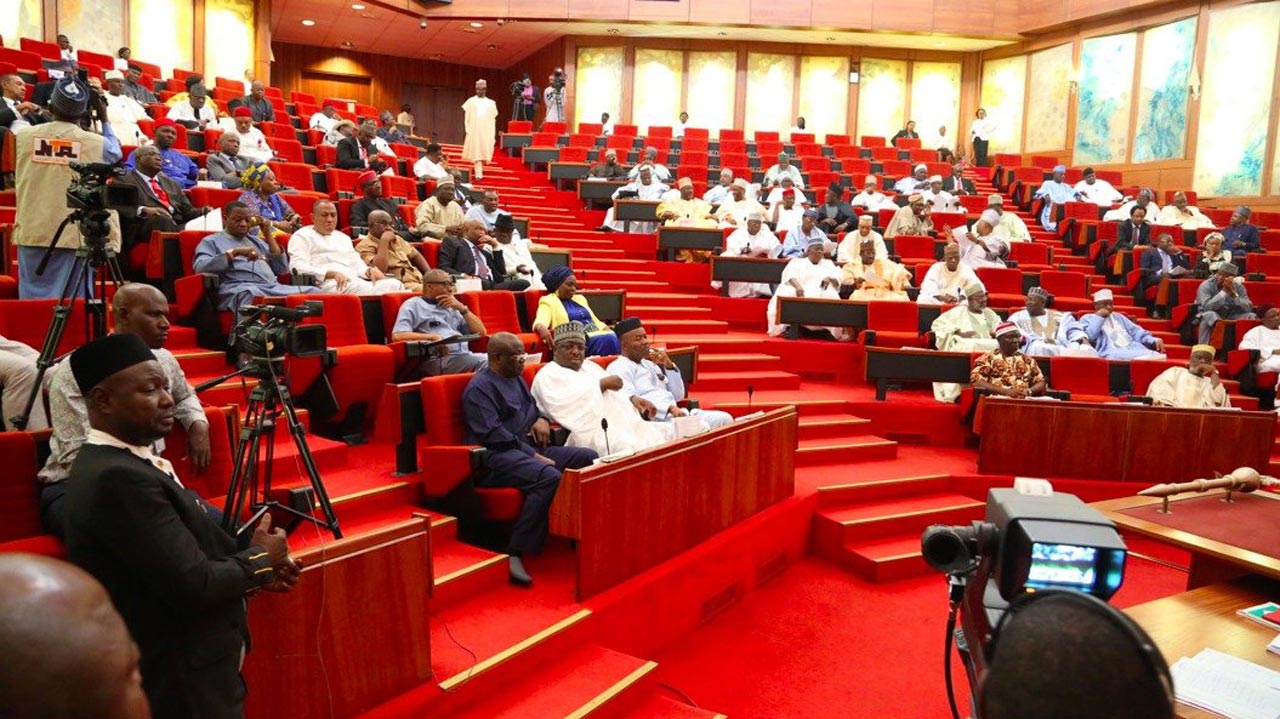
Opposition senators were on Tuesday evening left rueing how they bungled an opportunity to firmly entrench real-time transmission of election results after they were overwhelmed by forces of the Presidency acting in league with loyal All Progressives Congress (APC) senators.
GWG.ng reports that ahead of Tuesday’s emergency session, opposition senators had on Monday evening held a strategy meeting convened by Senator Aminu Tambuwal, where plans were drawn up to force through real-time automatic transmission of election results via an amendment to Section 60(3) of the Electoral Act.
Central to the strategy was a call for division — a procedural move that would compel senators to be formally identified with their votes on the issue. The opposition had banked on what they believed was near-unanimous support for the amendment during the earlier closed-door session. They also calculated that live television coverage of the plenary would pressure APC senators to buckle, much like several lawmakers did during the failed third-term bid of 2005. Senators Enyinnaya Abaribe and Abdul Ningi were reportedly pencilled down to press the demand for division and mount pressure on the Senate President.
However, it was gathered, they did not reckon with the intense lobbying effort allegedly marshalled from the Presidential Villa. One source named the Chief of Staff, Femi Gbajabiamila, as a key channel in the lobby effort, though that claim had not been independently confirmed as of press time.
At present, the APC holds 80 Senate seats; the PDP 21; NNPP 1; APGA 1; LP 2; and ADC 1.
One instrument reportedly deployed to keep APC senators in line was the issue of return tickets ahead of future elections.
As Tuesday’s session progressed towards item 148 of the votes and proceedings of the previous session, dealing with the contentious mode of transmission, Senate Chief Whip, Senator Tahir Monguno, raised a point of order under Orders 1(b) and 52(6) of the Senate Standing Orders, seeking to rescind the chamber’s earlier rejection of electronic transmission.
Monguno said the move was informed by public reaction and the need to align the Electoral Act with Nigerians’ expectations.
“This amendment is to bring our laws in line with the wishes and aspirations of the people,” he said, immediately sparking optimism among opposition senators who believed they were gaining ground
So convinced were they of imminent victory that their own “attack dog,” Senator Abdul Ningi (PDP, Bauchi Central), seconded the motion.
That optimism, however, proved premature.
Monguno swiftly caught the opposition off guard by introducing an amendment that would allow manual transmission in the event of network failure.
He added: “Upon careful examination of the bill, fresh issues have emerged in respect of Clause 60(3), requiring further legislative consideration for smooth and transparent elections.”
He further argued that electoral legislation must be subjected to the highest level of scrutiny because of its far-reaching implications for democracy and political stability.
It was at that critical moment that Senator Abaribe invoked Order 72 and called for a division to ensure every senator was publicly identified with his vote. However, with Senator Ningi — one of the opposition’s leading strategists — having earlier seconded the APC motion, resistance to the new amendment appeared fractured, plunging the Senate into a ten-minute rowdy session.
Faced with the likelihood of a crushing defeat, Abaribe was eventually compelled to withdraw his call for division.
Ironically, it was further gathered that Abaribe was unaware that several APC senators who were uncomfortable with the amendment had allegedly planned to stage a walkout during the vote to avoid being publicly identified with the proposal.
“Many of the APC senators later told us that they would have walked away to avoid publicly voting for the proposal,” one opposition senator told GWG.ng