
Investment in education doesn’t automatically lead to growth, development of a nation – Prof Abhuere

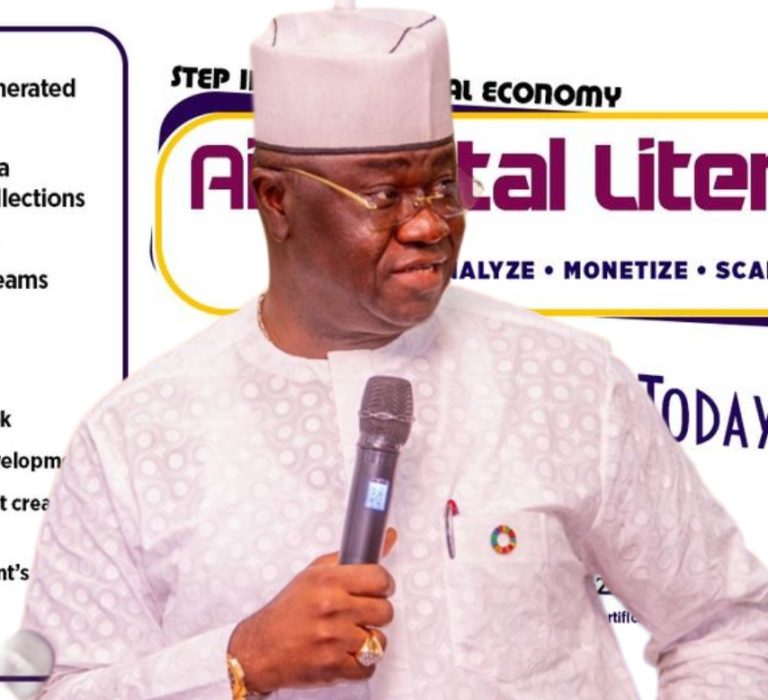
Prof. Abhuere
The place of education in the growth and development of a nation was the focal point of a lecture delivered recently by Prof John Abhuere.
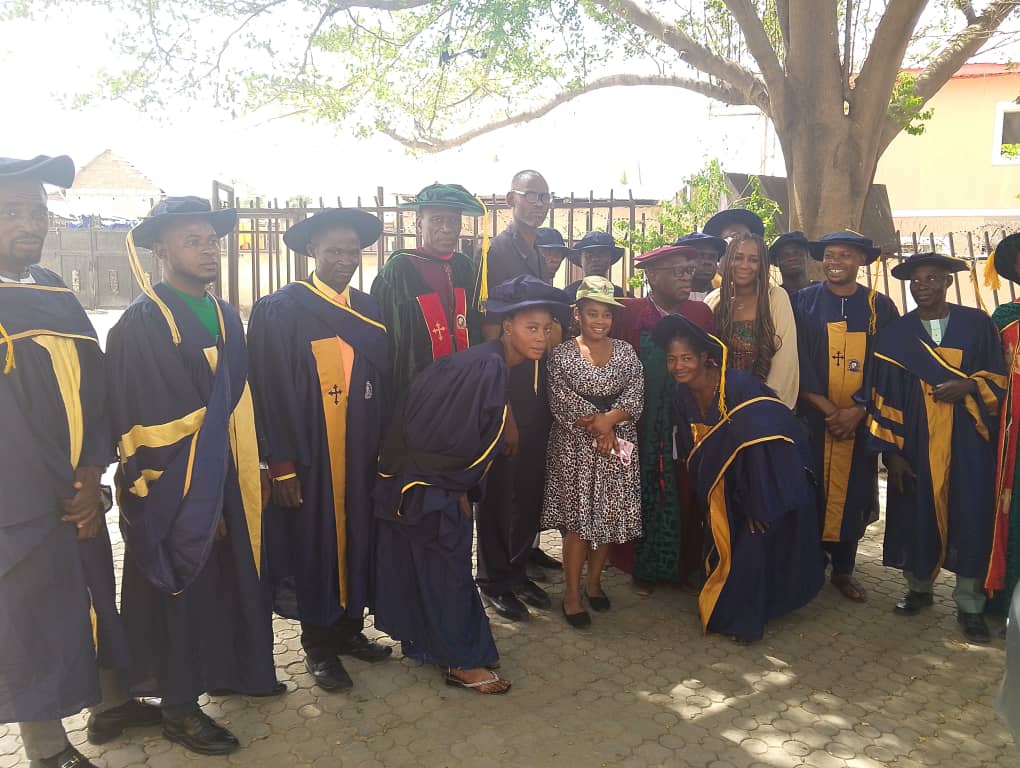
The lecture entitled: “Quality Education: A Pathway to Human Capital Growth and Development in Nigeria, delivered at the University of America-CIBS Matriculation/Graduation Ceremony held at the National Institute for Legislative & Democratic Studies (NILDS), Abuja, focused on the relationship between education and national development.
The lecture harped on the relevancy and relationship between education and prosperity.
Prof Abhuere, a retired director with the National Youth Service Corps (NYSC) observed that historical evidence does not necessarily support the optimistic assumption that investment in education automatically leads to growth and development.
“Our observation is that the general belief in the automatic relationship between investment in education and national development is wrong. Investment in education alone cannot guarantee development. Nigeria’s developmental challenges, such as unemployment and poor governance, demand a closer look at the context and purpose of education. They are not caused by education per se.There is the need for critical reflection on historical and empirical realities that shape educational outcomes in the country.”
He agreed that education is crucial for individual growth, economic prosperity, and societal progress, arguing further that the function of education is to teach individuals to solve problems, and it produces people of good character and sound learning.
However, he noted that although education is widely accepted as essential to growth, there is the need for caution against simplified narratives. “Some countries with significant educational investments have experienced rising unemployment and social unrest. This contradiction implies that factors beyond education influence national development. Political instability, corruption, and inefficient management can stifle the potential benefits of education. Thus, the assumption that education inherently drives development must be qualified and contextualised.”
Using Nigeria as a case study, Prof. Abhuere, the director of Centre for Child Care and Youth Development (CCYD), Abuja, said equating education with national growth and development may be far off the mark, saying that purely economic approach to education is problematic.
Going further, it is his belief that “The term ‘quality education’ is subjective, like ‘beauty,’ and a strict focus on it could unintentionally exclude more children from schooling, a major concern for Nigeria with over 10 million out-of-school children.”
According to him, in the 1960s, Nigeria had a widespread optimism that education was the “key to national development,” leading to heavy investment from both developing countries and foreign aid donors. This optimism waned as “unintended consequences” emerged, such as unemployment and widening inequalities, leading to a “crisis of educational expectations.”
“The ‘Human Capital Theory,’ which argued that formal education directly determines earning power, came under heavy criticism.
“The major problem with the Human Capital Development Theory is ‘unmet expectations’ from graduates who see education as a ‘meal ticket’ to high-level jobs. This mindset leads to disappointment when jobs are not available and can cause people to stay idle or seek menial jobs abroad that they would not accept at home.”
“My Idea of what a Good or Quality Education should be to me, a good or quality education should enable the educated person to brace up to emerging challenges at home and outside home. This is so because I believe that education is about the enlightenment and nurturing of the soul and the disciplining of the body to be able to solve problems and face challenges of life appropriately. In a word, the ‘enlightening, nurturing’ enabling and empowering experience of education ought to make the educated ready and open to emerging challenges and overcome obstacles. Education should be conceived as a source of internal light for critical thinking and problem-solving, not just a means ofto a government or private sector job. It has its intrinsic worth.
“When I see reports of mountains of corruption, infrastructural decay and deficiency, poverty, under-development, large scale unemployment, the wanton violation of rules and regulations of the game, gross inefficiency, debased morality, mismanagement, unpatriotism, hatred on grounds of religion, ethnicity, among others, I wonder what kind of education the Nigerian elites have received over time. It is certainly not the one that makes the educated to be good citizens, effective society builders or one that makes the citizens to be patriotic, nationalistic and altruistic.”
Prof Abhuere advised that “education should be conceived as a source of internal light for critical thinking and problem-solving, not just a means to a government or private sector job. It has its intrinsic worth.”
He added: “The best policy is to pursue “education for all” to address illiteracy and the high number of out-of-school children, even if it is not “quality” in an ideal sense. Effective management, efficient administration, and able leadership are critical for success; without them, educational policies will fail. Manpower planning and analysis should be used to identify skill shortages and surpluses to align education with the needs of the economy.”