
NIBSS moves to eliminate transfer fees on instant payments by 2026

Nigeria’s Interbank Settlement System (NIBSS) has unveiled plans to eliminate transfer fees on its NIBSS Instant Payment (NIP) platform by 2026, a move designed to accelerate the country’s transition from a cash-heavy economy to a smart, digitally driven financial system.
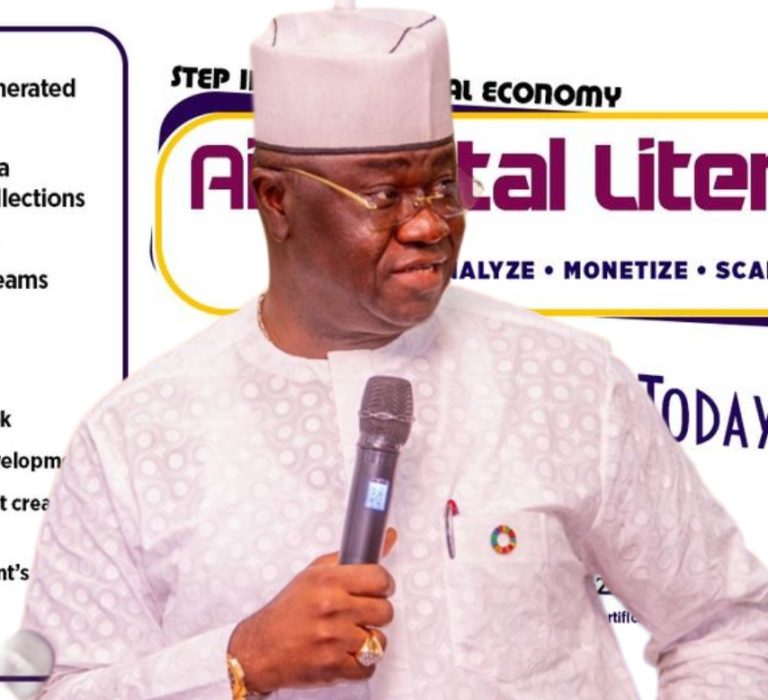
Premier Oiwoh, managing director and chief executive officer of NIBSS, announced the initiative at the Globus Bank Fintech Summit 2025 in Lagos, where he delivered a keynote address titled “From Cashless to Smart Economies: Shaping the Next Frontier of Financial Innovation.”
According to Oiwoh, the initiative will replace the current per-transaction fee with a subscription-based model, effectively making digital transfers free at the point of use.
The aim, he explained, is to remove the biggest barriers preventing millions of Nigerians from adopting digital transactions cost and lack of perceived value.
“Our biggest competition is not fintechs or banks; it is cash on the street,” Oiwoh said, adding that “A man with N100 or N1,000 will avoid digital transactions if fees make them more expensive than cash. By next year, we will begin the process of eliminating NIP fees entirely, moving to zero cost and a subscription model. This will unlock innovation and encourage adoption.”
The NIBSS MD stressed that Nigeria must take deliberate steps to strengthen its national payment infrastructure, foster interoperability, and enhance resilience if it is to truly build a smart economy.
He pointed to India and China as examples of countries that implemented coordinated national strategies to drive financial inclusion, warning that Nigeria’s siloed approach—where banks, fintechs, and regulators often work separately could limit progress.
“It’s not about opening a bank account. Beyond that, people must be economically included. Until we have a deliberate national action plan led at the highest level of government covering infrastructure, devices, and connectivity; our financial inclusion will continue to exclude many,” he noted.
Oiwoh added that customer trust and stability must remain at the heart of payment innovation: “The customer should not suffer. Nigerians deserve reliability and solid stability in digital payments.”
Highlighting recent achievements, Oiwoh revealed that Afrigo, Nigeria’s national card scheme launched in 2023, has processed over N70 billion worth of transactions in 2025 alone, with more than one million cards in circulation.
Uniquely, Afrigo offers instant credit on point-of-sale transactions, a feature he described as a global first.
He further disclosed that the upcoming multipurpose national ID card, to be rolled out by the National Identity Management Commission (NIMC), will carry the Afrigo payment rail, allowing millions of Nigerians to access financial services directly through their national identification card.
Oiwoh used the platform to call for greater investment in cybersecurity and fraud prevention, warning that insider collaboration remains one of the most dangerous threats facing digital payments.
“There is no fraud in this country today that we don’t understand how it happened,” he said, referencing the NIBSS Hawk platform, which has foiled several major fraud attempts.