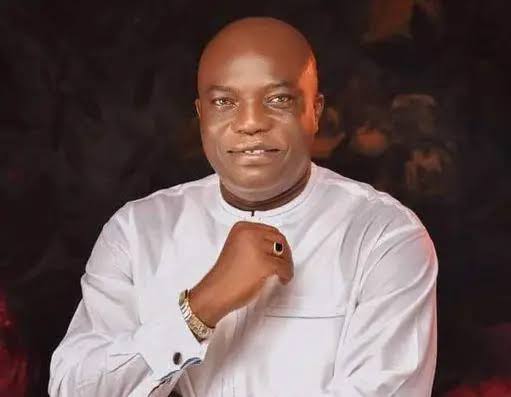

ntel remains bullish about Nigeria market comeback to fill innovation gaps

Maurice-Diya, ntel CEO
Soji Maurice-Diya, Chief Executive Officer of NatCom Development & Investment Limited (trading as ntel), says the company remains bullish about its market comeback in Q1 2026, unveiling a renewed strategy to fill what he describes as “innovation gaps” in Nigeria’s telecoms ecosystem.
Speaking during the Technology Times Thought Leadership Series, a quarterly platform powered by Digital Transformation Media Limited (DTML), publishers of Technology Times and eGovernance Nigeria Magazine, the ntel CEO shared his company’s renewed vision to re-enter Nigeria’s highly competitive telecoms market through an infrastructure-light model anchored on innovation, broadband inclusion, and youth-focused digital engagement.
“We think that there’s a lot of innovation that’s yet to happen in this space,” Maurice-Diya said. “With all due respectto our partners and competitors in the ecosystem, we don’t think there’s been nearly enough innovation in the last few years.”
According to him, ntel’s return will not seek to replicate existing market models, but to target niche segments of Nigerian consumers through products that deliver distinctive value propositions.
“For us to go and play in the 100 million subscriber game, that’s not what we’re about,” he stated. “We’re about to find a very small subset of subscribers, and serve them extremely well. We think the future will kind of take care of itself if we’re able to do that very well.”
Maurice-Diya said ntel’s return reflects a broader belief that the Nigerian telecoms industry still holds enormous untapped potential for innovation and cross-sector value creation.
He noted that while the industry has matured over the last 25 years—becoming a key enabler of Nigeria’s economy—fresh ideas are still required to drive its next phase of evolution.
“Most of us are aware that the telecoms industry in Nigeria, as we know it today, started almost 25 years ago,” he said. “It has witnessed significant and impactful growth, particularly in supporting Nigeria’s broader commercial ecosystem. Over the last 25 years, one would argue that the sector has become a mature market and there’s a lot more stability ”
He commended long-standing operators like MTN, Airtel, and Glo for demonstrating long-term commitment to the market, adding that their continued investments have strengthened the industry’s contribution to Nigeria’s GDP.
However, he argued that the next chapter of the Nigerian telecoms story must see operators evolving beyond providing connectivity, toward becoming digital platforms that enable and unlock new opportunities across other sectors.
“Telcos have to be able to play more than just a communication or connectivity role and become a digital platform that can enable and unlock a lot of additional opportunities,” he said.
On the policy front, the ntel CEO praised ongoing reforms driven by the Federal Ministry of Communications, Innovation and Digital Economy, especially the tariff relief measures introduced between late 2024 and early 2025.
He said these interventions have created “a bit more justification for further investment in the industry.”
Maurice-Diya emphasised the need for stronger synergy between the communications and financial sectors, which he described as critical to the long-term sustainability of Nigeria’s digital economy.
“There needs to be more synergy between the communications ecosystem and the financial sector,” he said. “To the extent possible that there is a bit more closer working relationship between both ecosystems to birth what I think is the next chapter that can help define the broader ecosystem in the next 25 years.”
He added that dynamic pricing, tax incentives, and sustainability-driven infrastructure policies will remain central to improving industry competitiveness.
“Dynamic pricing and allowing a bit more flexibility in the tariff regime might be one,” he explained. “In addition to it there are tax incentives. Again, I think the government has played a role in creating some reduction in tax-based taxes around withholding tax. A little bit more can be done there.”
The ntel CEO commended the federal government’s rural broadband initiatives, particularly the planned deployment of 7,000 telecom towers and 90,000 kilometres of fibre optic infrastructure over the next five years.
“I think those, while they’re not necessarily policy interventions, are welcome interventions that will help,” he said.
“We at ntel will play a role not only by supporting the ecosystem but also creating a couple of interesting products.”
He commended long-standing operators like MTN, Airtel, and Glo for demonstrating long-term commitment to the market, adding that their continued investments have strengthened the industry’s contribution to Nigeria’s GDP.
However, he argued that the next chapter of the Nigerian telecoms story must see operators evolving beyond providing connectivity, toward becoming digital platforms that enable and unlock new opportunities across other sectors.
“Telcos have to be able to play more than just a communication or connectivity role and become a digital platform that can enable and unlock a lot of additional opportunities,” he said.
Supporting National Connectivity Goals
The ntel CEO commended the Federal Government’s rural broadband initiatives, particularly the planned deployment of 7,000 telecom towers and 90,000 kilometres of fibre optic infrastructure over the next five years.
“I think those, while they’re not necessarily policy interventions, are welcome interventions that will help,” he said.
“We at ntel will play a role not only by supporting the ecosystem but also creating a couple of interesting products.
“We’ve also played a role in being a partner to the rest of the ecosystem, supporting everybody else to make sure that the industry continues to be sustainable,” he said.
On the broader telecoms market environment, the ntel boss stressed the importance of a fair and competitive ecosystem that encourages participation by new entrants.
“The first thing is a fair playing ground for all players,” Maurice-Diya said. “The ecosystem has to be able to see that there aren’t any preferential treatments being handed out to different players. The market is big enough to sustain a multiplicity of players, and we hope to be able to play in that role.”
He encouraged continued market liberalisation and pro-innovation regulation, which he believes will be critical to maintaining Nigeria’s regional and global competitiveness over the next decade.
The Technology Times Thought Leadership Series is a platform created by Digital Transformation Media Limited (DTML) to engage top leaders, innovators, and policymakers in insightful dialogues on the future of technology and digital transformation in Nigeria.
Through the platform, DTML, publishers of Technology Times, Nigeria’s authoritative technology news group, and eGovernance Nigeria Magazine, continues to showcase industry and government leaders driving digital transformation initiatives across government and enterprise sectors.
Through its platforms, DTML provides trusted journalism and thought leadership that spotlight innovation, policy, and technology adoption shaping Nigeria’s digital future.