

Presidential Villa transits to solar energy, exits national grid, says State House Permanent Secretary
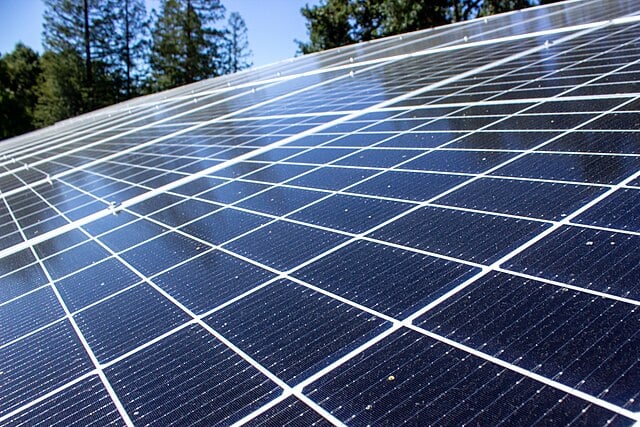
Solar energy
The Aso Rock Presidential Villa in Abuja is henceforth going to be power by solar infrastructure as it is set to disconnect from the national power grid by March 2026 as the federal government finalises its solar mini-grid initiative at the seat of power.
This came to light Wednesday as the Permanent Secretary of the State House, Temitope Fashedemi, disclosed during the 2026 budget defence session before the Senate Committee on Special Duties at the National Assembly.
He explained that installation of the solar infrastructure was completed in late 2025 and has since been undergoing testing and technical assessments
Fashedemi expressed optimism that the Villa would achieve full transition to solar power within the first quarter of 2026, a move expected to reduce the government’s electricity expenditure drastically.
To demonstrate the plan’s feasibility, he pointed to the State House Medical Centre, which has been operating primarily on solar power since May 2025
The centre now operates largely off-grid, with minimal reliance on diesel generators and the Abuja Electricity Distribution Company (AEDC).
The solarisation of the Villa has come at a high cost. The Federal Government earmarked N10 billion for the project in the 2025 budget, while the 2026 Appropriation Bill proposes an additional N7 billion to finalise the initiative.
Critics have questioned the rationale of solarising the Presidential Villa while millions of Nigerians still suffer from epileptic power supply. Some argue the move suggests a lack of confidence in the national grid.
However, top government officials have defended the investment. Director-General of the Energy Commission of Nigeria, Mustapha Abdullahi, previously described the Villa’s energy cost as unsustainable, citing an estimated annual electricity bill of N47 billion.
Presidential spokesman, Bayo Onanuga, also backed the move, referencing the White House’s adoption of solar energy as global best practice.
Before the project, the Villa was among the top government debtors to AEDC. In February 2024, the distribution company listed an outstanding bill of N923.87 million. After reconciliation, the amount was revised to N342.35 million, an amount President Bola Tinubu ordered to be paid.
Fashedemi revealed that during the solar transition, several instances of overbilling were uncovered, including payments for power never supplied. He said the Villa was in talks with AEDC to address the “legacy liabilities.”
He also disclosed that ageing generators in the Villa may no longer be needed following the switch. “Though we were advised to replace them, the success of the solar system could eliminate such costs, aside from a few retained for emergencies,” he added.
Meanwhile, the Chairman of the Senate Committee, Senator Kaka Lawan (Borno Central), raised concerns over the N127 million budgeted for sport utility vehicles in the State House proposal.
He described the allocation as grossly inadequate, arguing that the amount would not cover the cost of even one bulletproof vehicle. “We can’t have visiting dignitaries riding in fairly used cars,” he said, urging the Budget Office to revise the figure.
Despite his criticism, Lawan commended the State House for appearing promptly to defend its budget. “This is the example we want others to follow,” he added.
For decades, billions of dollars have been pumped into the power sector in Nigeria by successive administrations, however, the country still experiences blackouts and National Grid collapses from time to time.