


Strengthening the Nigerian Generations of Digital Leaders
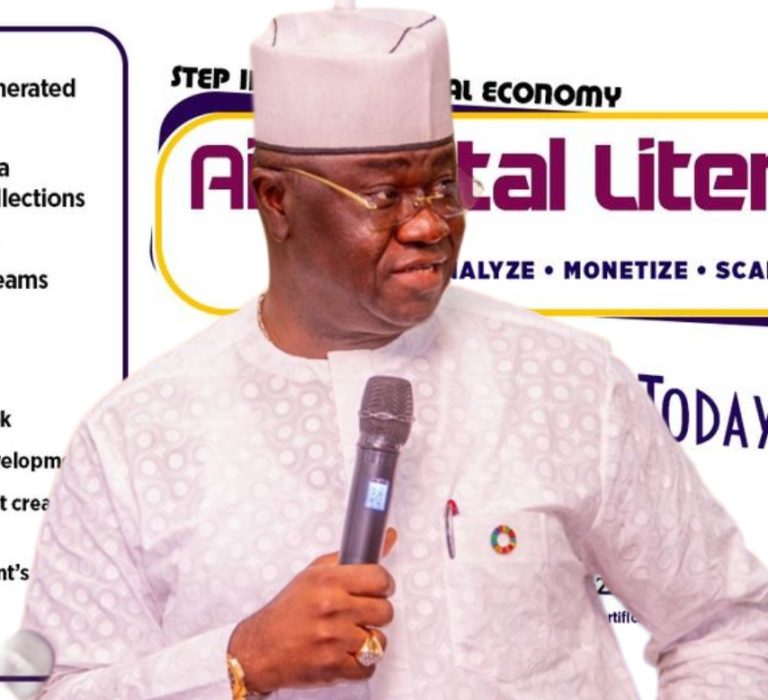
By Prince Clem Ikanada Agba CON
It is a necessity, learning about content creation, digital marketing, YouTube growth and monetisation, TikTok and Instagram strategy, e-commerce, data collection, and personal branding. These are not hobbies; they are the building blocks of the digital economy, and for a country like Nigeria, with a population of over 200 million and a median age of about 18. The digital economy is not just an opportunity.
I say that because we have millions of young Nigerians entering the labour market every year, many of who are highly educated and deeply talented. The traditional economy, as it exists today, simply cannot absorb them all, but the digital economy does not have those same constraints. A young person in Maiduguri can build a YouTube channel that reaches audiences in Lagos, London, and New York. A woman running a small business in Calabar can use Instagram and Facebook to sell products across the country without a physical shop. A data analyst in Kano can work for clients anywhere in the world from a laptop. The digital economy removes the barriers of geography and capital that have held back so many of our people for so long.
That reality is what makes a programme like this so important. It is not just teaching skills alone, it is also opening of doors. The fact that young Nigerians are here today, that this programme is free, and that PNGI has the vision to replicate it across all six geopolitical zones tells me that the organisers understand something fundamental: digital literacy is no longer optional, it is the foundation of economic participation in the 21st century.
I know this from personal experience; for close to four years, I served as the Honourable Minister of State for Budget and National Planning. Every meaningful decision we made during that period was driven by data and technology. We built a research laboratory that modelled economic scenarios to shape the National Development Plan. We launched Eyemark, a mobile and web application that allowed citizens to monitor Federal Capital Projects from their phones. We carried out the Multidimensional Poverty Index study that revealed 133 million Nigerians experience multidimensional poverty. None of these would have been possible without digital tools and the people who knew how to use them.
So when I look at the skills you are acquiring today, be it data collection, analytics, content creation, or digital marketing, I do not see them as just career skills, I see them as nation-building skills. The same data collection techniques that help a business understand its customers can help a government understand the needs of its citizens. The same analytics that grow a YouTube channel can track the progress of public projects. There is a direct line between what you are learning in this room and the kind of informed, accountable governance that Nigeria needs.
Now, I know what some of you may be thinking. “This is a Digital Intelligence Masterclass. When is he going to talk about AI?” I would not be a very good keynote speaker if I ignored the elephant in the room. So let me talk about it, and I want you to pay close attention, because what I am about to share did not happen last year. It happened in the last two weeks.
Last Friday, an AI company called Anthropic announced a new security tool that can scan millions of lines of computer code, find security weaknesses that human experts have missed for years, and suggest how to fix them. Within hours, some of the biggest cybersecurity companies in the world saw their stock prices crash. CrowdStrike fell 8 percent. Cloudflare fell 8 percent. Okta fell over 9 percent. The entire cybersecurity sector index dropped to its lowest point in over two years, in a single day.
Then on Monday, the same company announced that its tool can now modernise a type of old computer code called COBOL that runs nearly all bank ATM transactions and most government systems worldwide. IBM, one of the most established technology companies on earth, dropped 13 percent. That is its worst single day in over 25 years. Bloomberg reports it is on track for its biggest monthly decline since 1968.
I am not a technology expert, I will be the first to admit that, but you do not need to understand the technical details to grasp what is happening. Billion-dollar companies, built over decades by some of the finest minds in the world, are being re-valued overnight because a tool can now do in minutes what their armies of engineers and consultants used to do in months. The world is not waiting, it is moving, and it is moving fast.
What fascinates me most is that we are entering a period where it is no longer enough to know how to operate a computer or use a spreadsheet. What will matter is whether you can think alongside intelligent systems, prompt them with the right marching orders, and apply their outputs to real problems. The people who will thrive are not those who can memorise the most information, it’s those who can direct intelligence, whether human or artificial, towards solving problems that matter.
Let me paint a picture of what this could mean for Nigeria. Imagine a state government that needs to reach five million citizens about a public health campaign or an agricultural programme. The traditional approach requires hundreds of human call centre agents, months of time, and enormous expense. Today, AI voice agents can make phone calls in over 32 languages, understand natural conversation, and handle hundreds of calls at the same time. The data from each call can be captured and analysed automatically by other AI agents, then presented to decision-makers in real time. Once set up, it runs on its own. What used to take months could take days.
When I was in the Ministry and we struggled to get timely data from across 36 states and the FCT, I would have given anything for a system like that. But I also know that the people best placed to build these solutions are not former ministers. They are the young Nigerians in rooms like this one, people who understand the technology at a level that my generation is still catching up to. What we can offer is the experience of knowing where the problems are: the bottlenecks in governance, the gaps in data, the places where better information would lead to better decisions. The combination of that experience with your digital skills is where the real power lies.
So let me challenge you directly. Do not leave here today and use what you have learned only to grow your follower count. That has its place, but think bigger!. Think about how data collection can improve the primary healthcare centre in your local government area. Think about how AI can help smallholder farmers solve their harvest and postharvest problems. Think about how your digital marketing skills can support a local business that has never sold a product online. The tools are now available, what matters is the ambition of the people using them.
I commend PNGI for this programme and for the vision to take it nationwide. As this initiative spreads across the country, let me remind all participants that complementing government’s efforts through constructive civic engagement and productive use of technology is the surest path to the rapid development we all desire. Nation building is a collective responsibility.
The digital revolution will not wait for us to be ready. It is already here. I believe the young Nigerians in this room have the capacity to be shapers of this new era, not spectators. Today’s masterclass is a step in that direction.
Being a paper delivered by Prince Clem Ikanade Agba CON, Nigeria’s immediate-past Minister of Budget and National Planning, as Guest Speaker at “The Digital Intelligence and Data Masterclass 2026” event, organised by the Progressive Next General Initiative (PNGI), held in Abuja
