



NAFDAC busts shops selling fake drugs in Anambra market
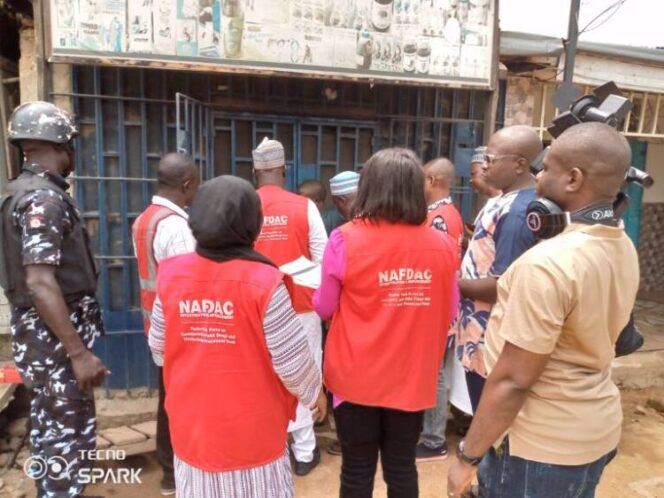
Officials of the National Agency for Food, Drug Administration and Control, NAFDAC, on Monday, stormed the popular Ogbo-Ogu Market, Bridge Head, Onitsha, in Anambra State on enforcement routine.
During the exercise, the operatives of the agency, led by the Director, NAFDAC South East Zone, Dr Martins Iluyomade, confiscated a wide range of adulterated, substandard and expired drugs found at the various shops.
Addressing journalists, Iluyomade said the exercise was in line with the agency’s mandate of eradicating fake, banned and other spurious NAFDAC-regulated products from circulating in Nigeria and to prevent members of the unsuspecting public from falling victim.
He said the agency was working in collaboration with the market task force in the exercise that led to the seizure of the multiple fake and banned products, adding that it was a combined exercise carried out simultaneously across all the South-East states.
He said: “Today, we are commencing our enforcement at the Ogbo-Ogu market. What triggered the exercise is that over time, we have been collating data and gathering intelligence on fake and substandard drugs in the market, and we got to the tail end and discovered that people are repackaging and rebagging fake and counterfeit drugs in the market.
“The exercise is aimed at raiding the markets of fake and substandard drugs and those that are made up of spurious, counterfeited and falsified medicinal products, unwholesome processed products and several other unsafe regulated drugs.
“This is taking place simultaneously across the South-East states, and it is aimed at sanitising the drug markets and safeguarding the health of members of the unsuspecting public.
“Among the drugs are expired, banned, substandard, deflective, repackaged and recalled products. We found out that some of the drug dealers are in the habit of imitating some popular drugs and pouring it into containers of the original manufacturer in order to deceive unsuspecting members of the public.
“And these drugs are very sensitive that can lead to death or permanent disability of the consumer. The confiscation of the products would eliminate the risk of their reintroduction into the market and a proof of the agency’s resolve to safeguard the health of the people.”
He advised members of the public to patronise only licensed and registered drug outlets, adding that security operatives and the investigative team of the agency, as well as other stakeholders, are on the ground monitoring and ensuring that the enforcement goes smoothly.
However, when asked, Iluyomade, who could not give the estimated value of confiscated products in monetary terms, said it was an ongoing exercise that could only be determined at the end of it.
Among the products found in the market to have been faked and counterfeited included antibiotics, anti-hypertensive, anti-diabetic, anti-asthmatic, aphrodisiacs, antimalarial, anti-inflammatory, herbal remedies and psychoactive drugs.
Others were banned drugs such as analgin, tramadol (above 100 mg), gentamycin (280 mg), codeine and controlled substances, vaccines, alcoholic and non-alcoholic beverages, cosmetics, chemicals and unwholesome food, empty plastics, bags and cans, among others.
Also present at the exercise were representatives of various trade unions, market leaders, the market task force, and other critical stakeholders.

Great article highlighting the crucial work NAFDAC is doing to protect public health. It’s terrifying to think how widespread the issue of counterfeit medications is. This really emphasizes the importance of buying from only licensed and reputable pharmacies.
I had a question related to the types of drugs being faked. The article mentions finding fake antibiotics, anti-hypertensives, and even antimalarials. I recently read an article that listed some of the most commonly counterfeited medicines globally, which seems very relevant to this discussion. Sorry to drop a link, but it might help clarify what I’m asking about: https://pillintrip.com/pt/article/which-medicines-should-you-avoid-buying-abroad-due-to-counterfeiting-risks
My question is: Based on NAFDAC’s findings and this global data, what are the top three categories of drugs that are most critical for the average Nigerian consumer to be vigilant about, and are there any specific visual or packaging signs you recommend people look for to identify these common fakes? Thank you for the important reporting.